Technical Basics, Safety & Care
Power Bank Certification Explained: Read Labels With Confidence
21st Sep•9 min read
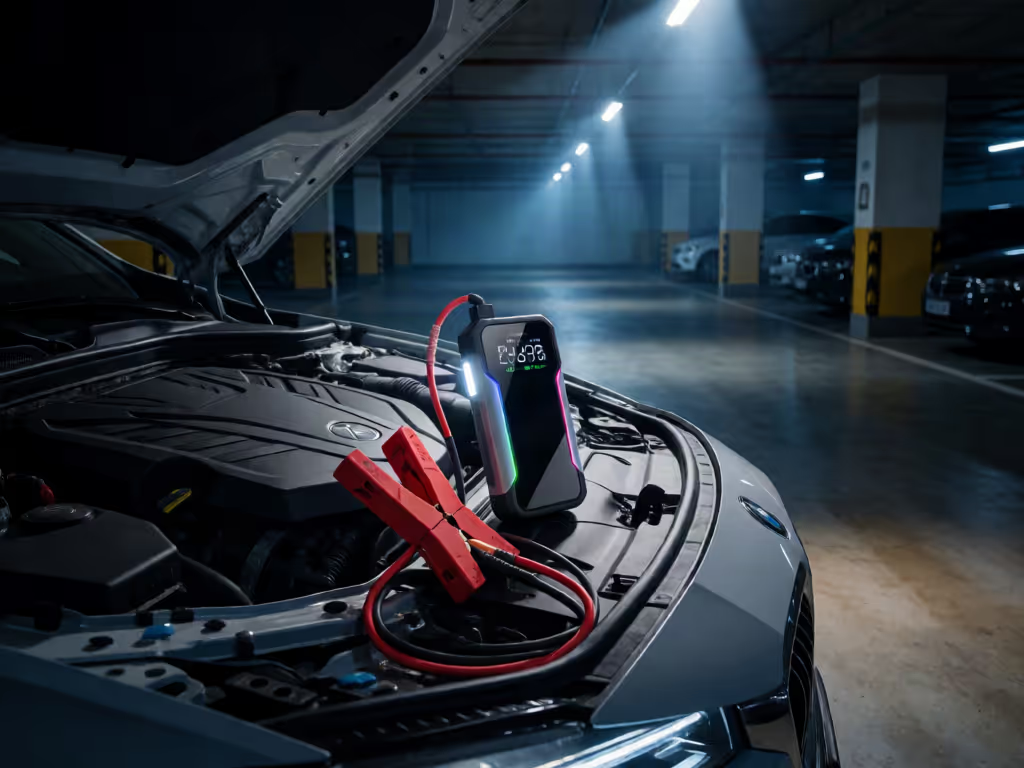
The strongest overall choice is not the pack with the biggest peak-amp number; it is the one whose voltage, battery-chemistry compatibility, stored energy, USB outputs, limits, and safety instructions are clearly documented for your vehicle and emergency role.
Important: Independent evidence is insufficient to rank reliability, cold-weather performance, number of starts, or overall value across brands. A jump starter can assist a start but does not diagnose or repair an underlying vehicle fault.
The NOCO GB40 combines a 12V vehicle-starting function with separately specified USB device charging. A phone power bank solar setup belongs to a different planning problem (keeping USB devices charged), not to proving that a pack can start a vehicle. The practical buying rule is to separate stored energy, momentary starting capability, and safety documentation before comparing price tags.
Value is delivered watt-hours, not coupon codes or buzzwords.
The phrase 'battery pack booster' is often used loosely. For a purchase decision, divide the task into two distinct jobs:
This distinction eliminates a common mistake: buying capacity for phone charging when the actual requirement is a 12V portable jump starter. Conversely, a pack bought mainly for emergency starting may have modest USB output. For example, NOCO lists its GB40's USB output at 5 V and 2.1 A; that is a specification to evaluate as a USB charging output, not evidence that every jump pack will suit every fast-charging phone or laptop.
Before looking at any number, write down the primary mission:
For each mission, compare specifications that address its stated role. A vehicle-starting need calls for documented battery compatibility and instructions; USB-device charging calls for documented USB output.
A watt-hour (Wh) describes stored energy capacity over time. A watt (W) describes the rate of power at a moment in time. They answer different questions:
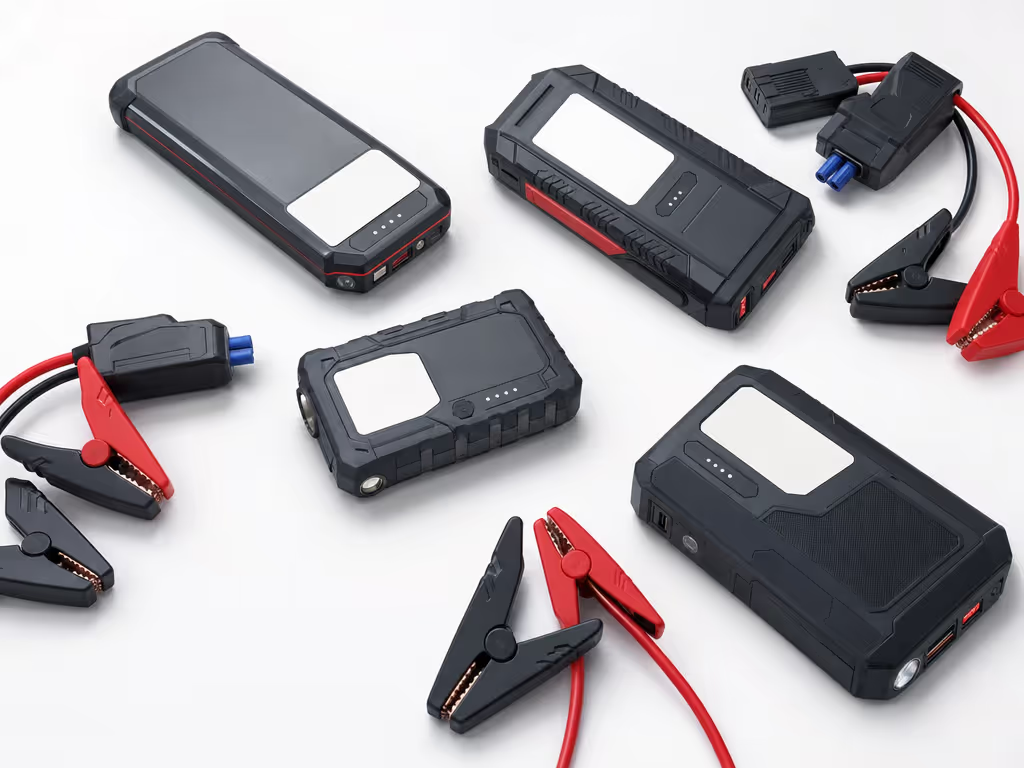
For sizing, a meaningful listing should make it possible to identify the pack’s energy capacity in Wh and its USB outputs separately from its starting claim. If it does not, the comparison is already weak. You cannot calculate price per delivered Wh, or a credible value index that accounts for performance stability, from a vague capacity claim and a large amp number.
Keep USB-output figures separate from starting claims in your notes. For the GB40, NOCO lists a 5 V, 2.1 A USB output and a 1,000 A peak-current rating; each is a separate stated specification.
Peak amps explained: a manufacturer may state a peak-current rating for a jump starter. NOCO, for instance, describes the GB40 as a 1,000-amp portable lithium-ion jump starter for jump-starting a dead battery, and its manual lists a 1,000 A peak-current rating.
That number is useful as a stated specification for that product. It is not enough to create a universal rule such as 'X peak amps fits every engine size' or 'the highest number always wins'. There is no universal, standardized relationship in the available evidence between advertised jump-starter peak amps and real-world cranking performance across brands.
Do not convert a peak-amp claim into any of the following without product-specific evidence:
Instead, check the vehicle and battery manufacturer instructions, then verify the jump starter’s stated battery-voltage and battery-chemistry compatibility in its own manual. A claim that a pack is suitable for one 12-volt lead-acid application cannot be stretched to every marine, RV, hybrid, EV, dual-battery, or non-lead-acid system.
A sensible vehicle emergency power checklist is short, but it is not optional:
A jump starter is not a diagnostic tool or a repair. If a vehicle repeatedly needs assistance, the underlying fault still needs attention.
Most importantly, follow this power bank safety guidance: do not attempt to jump-start a battery that is cracked, leaking, or visibly damaged. Lead-acid batteries can generate explosive gases during normal operation. Work in a well-ventilated area, and keep sparks, flames, and smoking away.
For the GB40, NOCO states that spark-proof technology and reverse-polarity protection apply in normal operation. Follow the product-specific instructions exactly.
For example, NOCO warns that on the GB40, activating Manual Override disables both spark-proof and reverse-polarity protection. That is not a casual workaround for an uncertain connection; it changes the safety margin. If you do not understand why a manual specifies such a mode and the conditions for its use, stop and follow the manufacturer’s instructions rather than experimenting.
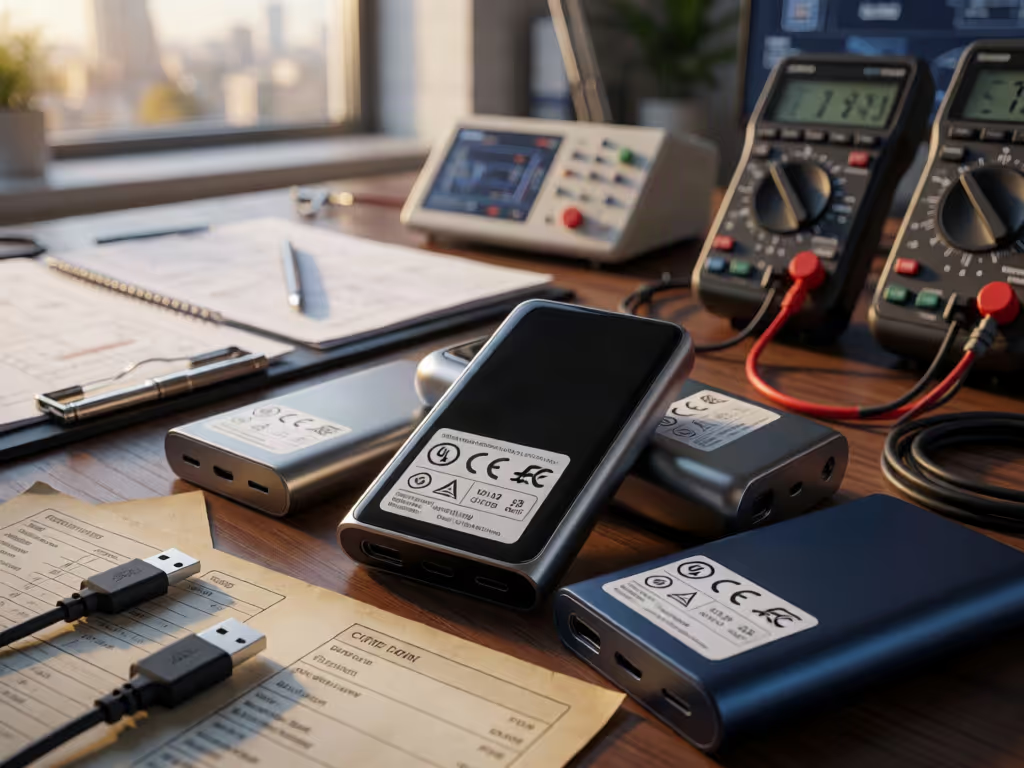
This is where deal skepticism matters. Safety claims are not interchangeable marketing badges. Look for clear operating instructions, clear limits, and support materials that tell you what the protections do, and when they do not apply.
The jump-starter function gets the attention, but the internal lithium-ion battery deserves the same discipline. For additional guidance on extending a power bank's usable life, see this power bank maintenance guide. Consumer safety guidance is direct:
If a lithium-ion device is smoking, leave the area and call emergency services. Do not keep a suspect pack in a car, bag, or enclosed storage space as though the problem will resolve itself.
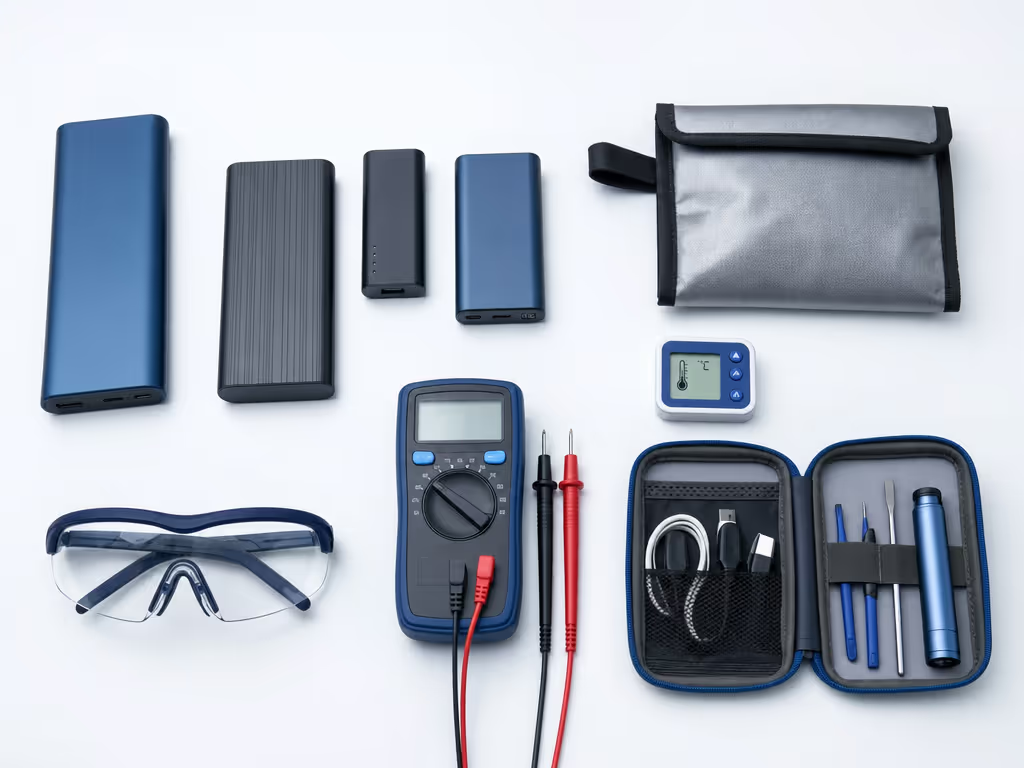
Also avoid turning a starting failure into a safety gamble. A visibly damaged vehicle battery is a stop condition, and a damaged jump pack is a stop condition. No discount, peak-amp claim, or convenience feature offsets that risk.
A phone power bank solar product may be useful for charging USB devices, because power banks are portable chargers for smartphones, tablets, and other USB-charged gear. But that tells you nothing about solar charging speed, field reliability, or whether a solar product is worth the cost. Those require solar-specific performance evidence.
For the GB40, NOCO lists a 5 V, 2.1 A USB output and says it can recharge smartphones, tablets, e-watches, and other personal devices. Treat that device-charging function as a separately specified feature alongside its vehicle-starting function.
A fair comparison has three columns: stated stored energy in Wh, USB output details, and vehicle-starting compatibility stated in the manual. Add the safety instructions and warranty terms before assigning a value score.
Do not pay a premium merely for peak amps, a polished shell, or a temporary coupon. Price per delivered Wh, warranty term scoring, and depreciation curves are useful only when the underlying capacity and performance information is clear enough to support them. Where that evidence is missing, the honest conclusion is not 'great deal'; it is 'not yet measurable'.
Summary and final verdict: Buy a jump starter power bank for the battery system and emergency role it is explicitly designed to handle. Use Wh to evaluate stored energy, read peak amps as a product-specific claim rather than a universal guarantee, and put safety procedures ahead of convenience. Value index updated: the best purchase is the one with clear compatibility, legible limits, credible safety instructions, and numbers that can be compared, not the largest headline number on the box.