Technical Basics, Safety & Care
Real-World Power Bank Capacity: mAh to Device Charges
10th May•9 min read
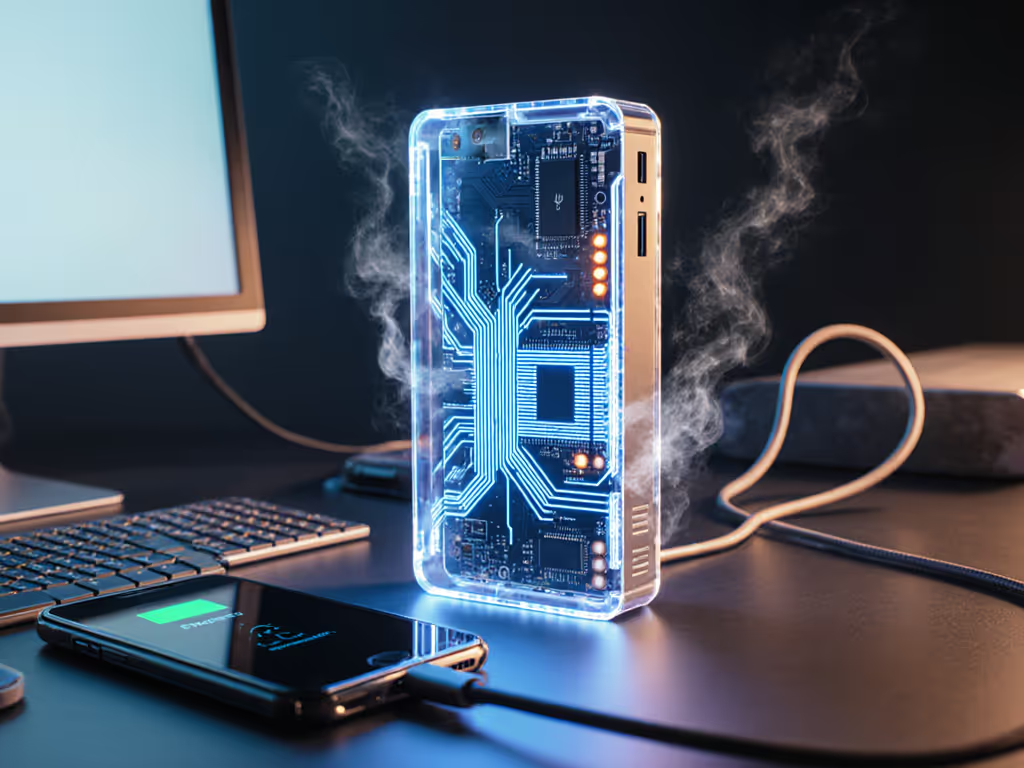
Pass-through charging allows a power bank to receive power from a wall outlet while simultaneously delivering power to connected devices. This feature solves a common bottleneck: needing to charge multiple devices in travel, work, or emergency scenarios when wall outlets are scarce. But the mechanism behind it is more nuanced than marketing copy suggests, and understanding that mechanism is the difference between predictable performance and frustrating surprises.
At its core, pass-through charging enables a power bank to act as an intelligent hub, splitting incoming current between charging its own battery and powering downstream devices in real time. When you plug a pass-through power bank into a wall outlet, electricity does not pool in the battery first; instead, specialized circuits decide how to route power based on demand and efficiency priorities. The power "passes through" the bank to connected devices while the bank itself charges at whatever rate is optimal for the battery's health. For certification details and safe implementation limits, see our pass-through charging requirements.
This differs fundamentally from conventional charging, where a power bank fills completely before devices can draw from it. With pass-through technology, you can charge a smartphone and refill the bank from one wall outlet, avoiding the awkward choice between devices.
The magic lives in the battery management system (BMS) and supporting power-path circuits. For engineering-level differences in voltage stability and thermal regulation, see our BMS comparison. Here's the sequence:
Detection Phase: When you connect a device to a pass-through power bank, the BMS measures the voltage and current draw of that device. Simultaneously, it tracks the bank's own charge level and thermal state.
Prioritization Logic: The circuits then execute a prioritization algorithm, a real-time negotiation between bank capacity, device demand, and wall adapter output. If the bank is depleted or near-empty, the incoming wall power goes primarily to the device, with excess flowing to the bank. As the bank's charge rises past a threshold, the circuitry adjusts, feeding more current back to the battery.
Simultaneous Distribution: This is where most marketing claims falter. Current flows in one direction at any given moment, because the cell itself cannot charge and discharge simultaneously. Instead, the pass-through circuits use time-sharing: millisecond-scale switching that makes simultaneous charging appear seamless, while the battery's internal impedance and the BMS logic ensure the bank and device are both topped up over time.
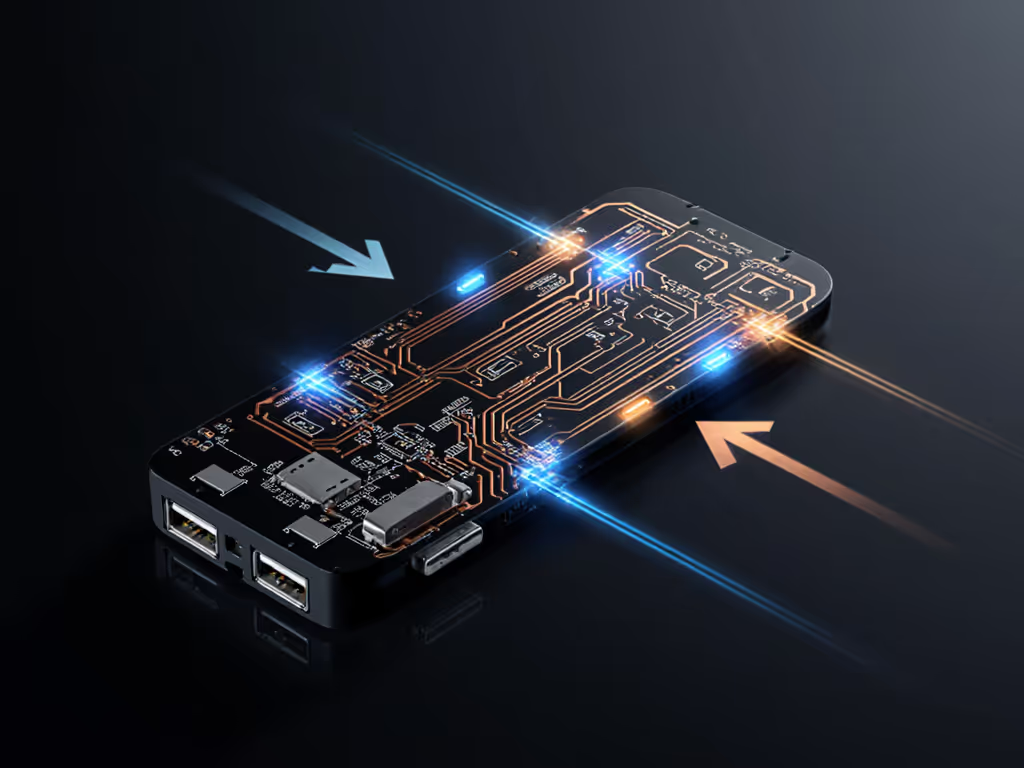
Pass-through charging is convenient but imposes a measurable cost: total charge time increases significantly compared to charging one device at a time, and thermal dissipation rises. Here's why:
Power Division Loss: Wall current is finite. If your adapter supplies 65W and your phone needs 30W, only 35W is available for the bank. Under multi-device load, the BMS must throttle one or both devices to manage heat. A high-quality bank prioritizes the phone to completion, then shifts focus to the bank (a triage approach that feels simultaneous but is genuinely sequential).
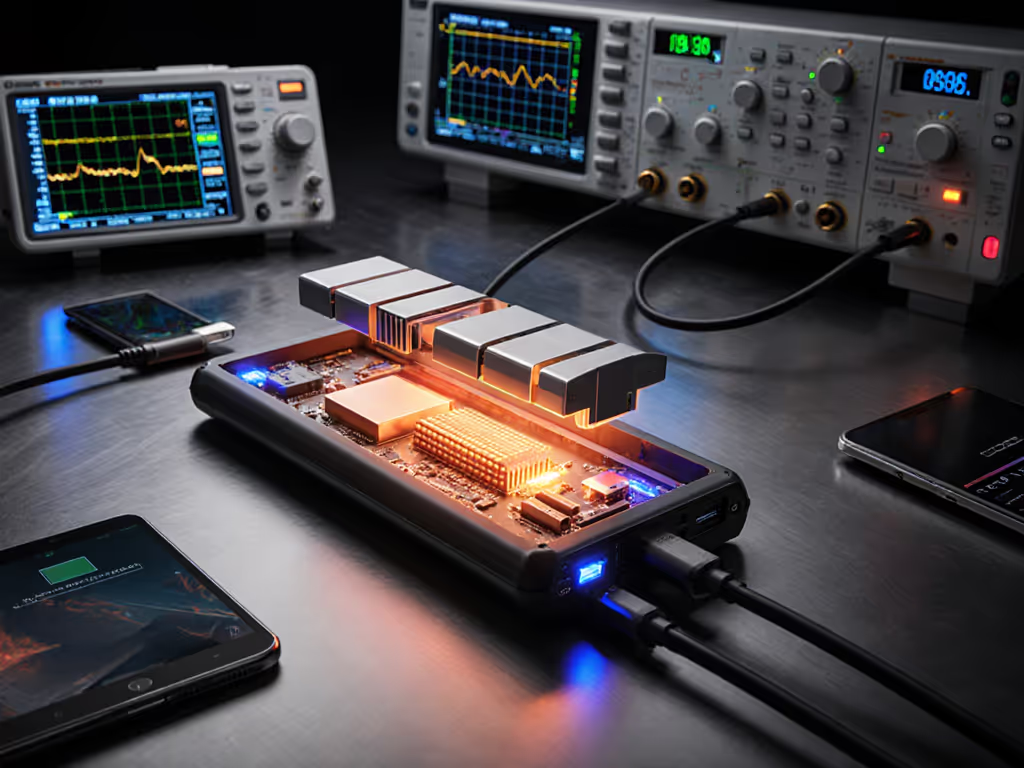
Thermal Buildup: Lithium-ion and LiFePO₄ cells generate heat during simultaneous input and output. The more current flowing through the BMS, the more wasted energy appears as warmth. This is not a failure mode, it is a byproduct of physics. Banks with pass-through typically run 5-10°C hotter than during charging only. Quality designs vent this heat; poor designs throttle charging to protect the cells. Our deep dive on pass-through thermal design explains why some models throttle or shut down under load.
Efficiency Floor: A well-designed pass-through bank achieves 85-90% round-trip efficiency under simultaneous load. Less reputable models drop to 75-80%, meaning 20-25% of wall energy is lost to heat and resistance. For field work, outdoor travel, or emergency scenarios where every watt counts, this difference determines whether you reach your destination with reserve power or arrive depleted.
This is why thermal management under multi-device load is as critical as the bank's rated watt-hours. A 20,000 mAh bank that throttles to 50% output when both the device and bank are charging is effectively a 10,000 mAh bank in the real world.
Pass-through capability is only as effective as the cable connecting the bank to the wall adapter, and the adapter's compatibility with connected devices. Many users find that fast-charging modes fail to engage, their phone charges at 5W instead of 30W, even with a "fast" charger connected. For cable specs and USB-C protocol details, see our power bank cables guide.
The culprit is rarely the bank; it's the cable. A cable without an e-marker cannot communicate USB Power Delivery (PD) profiles to the device. Without that handshake, the phone defaults to low-power trickle charging. I learned this firsthand when a colleague's new phone charged at snail's pace from a supposedly high-output bank until I traced the cable (unmarked, undersized, no negotiation possible). Swapping it for an e-marked alternative fixed the problem in seconds. That afternoon I resolved to pair every bank recommendation with the precise cable required to unlock its rated performance, because the cable is a component, not an accessory.
For pass-through scenarios, verify:
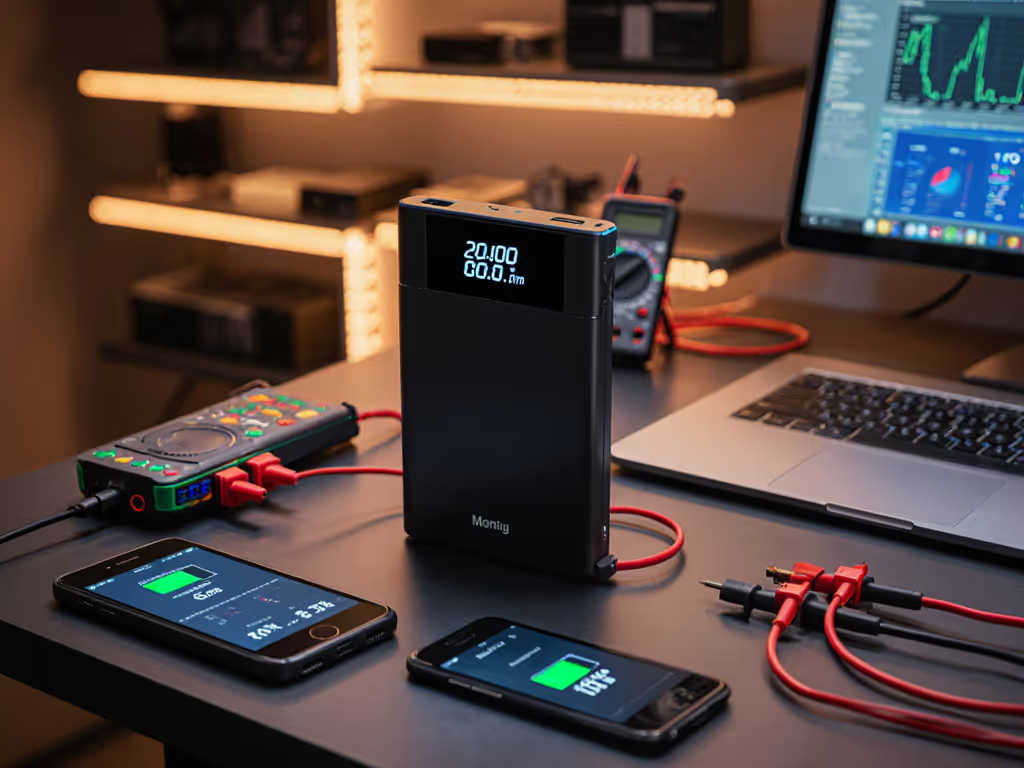
Measure twice, charge once. Verify the full chain (adapter, cable, bank input, bank output, connected device) before committing to a setup.
Scenario 1: Airport Layover You have 90 minutes, one outlet, a drained phone, and a half-depleted laptop. A pass-through bank (25,000 mAh, 65W input, 30W USB-C output) prioritizes the phone to full in 30 minutes, then shifts power to the bank for 60 minutes of input charging. The bank gains 50% capacity in that window. Result: phone is flight-ready, bank is usable for later, one outlet serves three devices. Without pass-through, only the phone charges, and the bank remains depleted.
Scenario 2: Field Reporting or Content Creation You're shooting for 4 hours in an urban environment with a mirrorless camera, drone, and phone. Each device drains simultaneously. A pass-through bank at your base camp (30,000 mAh LiFePO₄, 140W input/output via multiple ports) draws from hotel AC while all three devices charge. Thermal headroom is critical here, because simultaneous load under sun exposure can overheat a standard lithium bank. LiFePO₄ is more thermally stable, sustaining pass-through under higher ambient temperature.
Scenario 3: Outage or Preparedness Household Grid power fails. You're running on battery. Pass-through charging is irrelevant, you want maximum capacity and minimal drain. But once grid power returns, a pass-through bank lets you recharge the bank and keep devices alive during the transition, buying time for critical tasks.
Pass-through charging is a designed feature, not an accident. Understanding the tradeoffs, including thermal cost, total charge time, and efficiency loss, lets you match the bank to the job instead of expecting a silver-bullet charger. Your next step is to map your device ecosystem to realistic bank sizes and input/output specs, then test the actual cable-to-device negotiation under simultaneous load in a scenario that mirrors your real workflow. Data beats guesses, and setup confidence beats charging anxiety on the road.
When you choose a pass-through bank, remember: compatibility is baked in upstream. The cable, adapter, bank firmware, and device protocol must align before you need the bank in the field.