Technical Basics, Safety & Care
Real-World Power Bank Capacity: mAh to Device Charges
10th May•9 min read
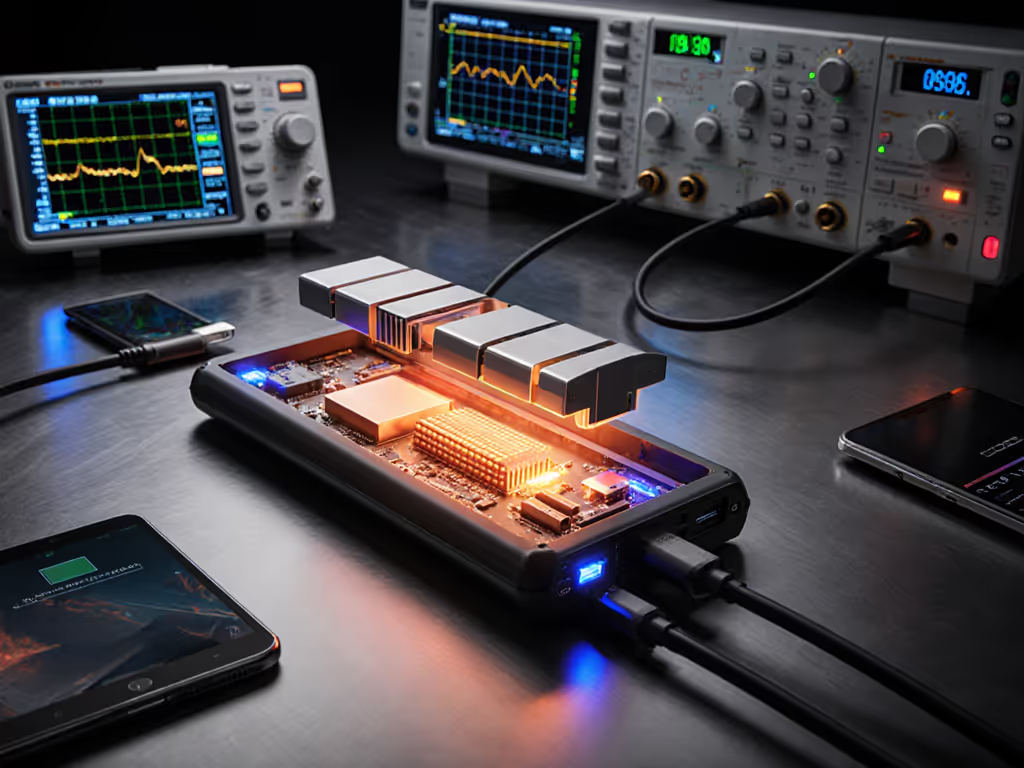
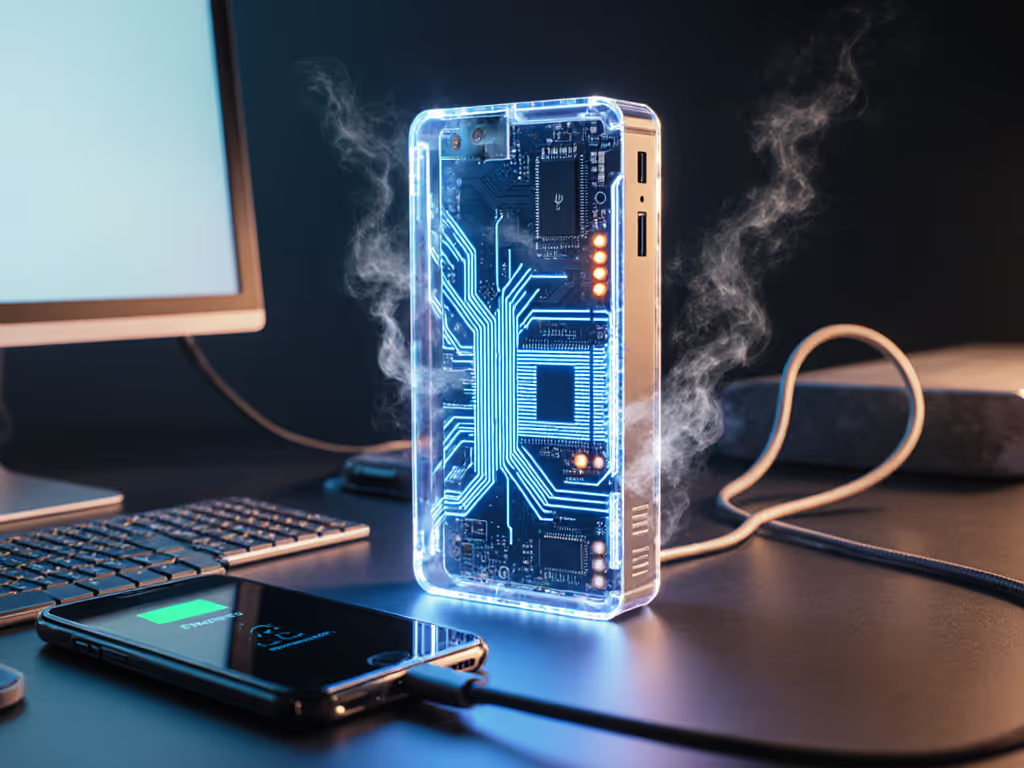
Pass-through charging technology relies on a battery management system (BMS) to split incoming AC power between charging the bank's internal cells and delivering current to connected devices simultaneously [1][2]. See our pass-through charging requirements guide for certified design constraints and limitations. The problem is not the concept; it's that thermal dissipation during this power split is often undersized, forcing the system to throttle performance or accelerate battery wear, especially under real-world multi-device loads and temperature extremes.
When you plug a power station into wall power, the incoming voltage doesn't magically flow two directions at once. Instead, the BMS detects the load being drawn by connected devices and routes that output power directly from the incoming source to the ports. Any remaining power (the net power after device load is satisfied) gets directed to charge the battery pack [3].
This is clever circuitry, not simultaneous bidirectional current. The BMS acts as an intelligent router. For engineering details on voltage stability and thermal regulation, see our BMS comparison. If your laptop draws 65W and your phone needs 20W, and you're feeding 120W from the wall, the remaining 35W goes to top up the battery. If your laptop stops drawing, that 65W plus the 35W margin now flows to the battery [1].
The trade-off is real: current flowing through any circuit generates heat. Every joule spent switching, converting, and routing is a joule lost as thermal energy. In a well-designed unit with active cooling, this overhead stays manageable. In budget units, it doesn't.
The core failure point is undersized heat dissipation. Many manufacturers use thin metal housings, passive-only cooling, or inadequate internal thermal pathways. When you're running multiple high-current devices (say, a 45W laptop and a 30W tablet) simultaneously, the BMS is orchestrating 75W of continuous pass-through while also trying to charge the bank's cells. The result:
Power dissipation exceeds the case's radiative and convective cooling capacity, internal temperatures climb, and the BMS triggers thermal throttling (it cuts output current to reduce heat generation) [2].
In low-end banks, this happens fast. A 90W input split three ways on a sultry afternoon will cause the bank to derate to 60W output, extending charge times and frustrating simultaneous fast-charging workflows.
Pass-through efficiency (the percentage of input energy that actually reaches your devices versus being lost as heat) depends entirely on circuitry quality and thermal margin [3]. In laboratory conditions with light loads and ambient temperature, a power bank might achieve 85-90% efficiency. In the field with full load?
Consider a scenario:
If thermal throttling engages due to poor heat sinking, the BMS may derate output to 70W total, leaving only 5W for the battery. That charging session becomes glacially slow, and your battery gets fewer complete cycles because you're topping up in tiny increments instead of full recharges. This accelerates the degradation clock.
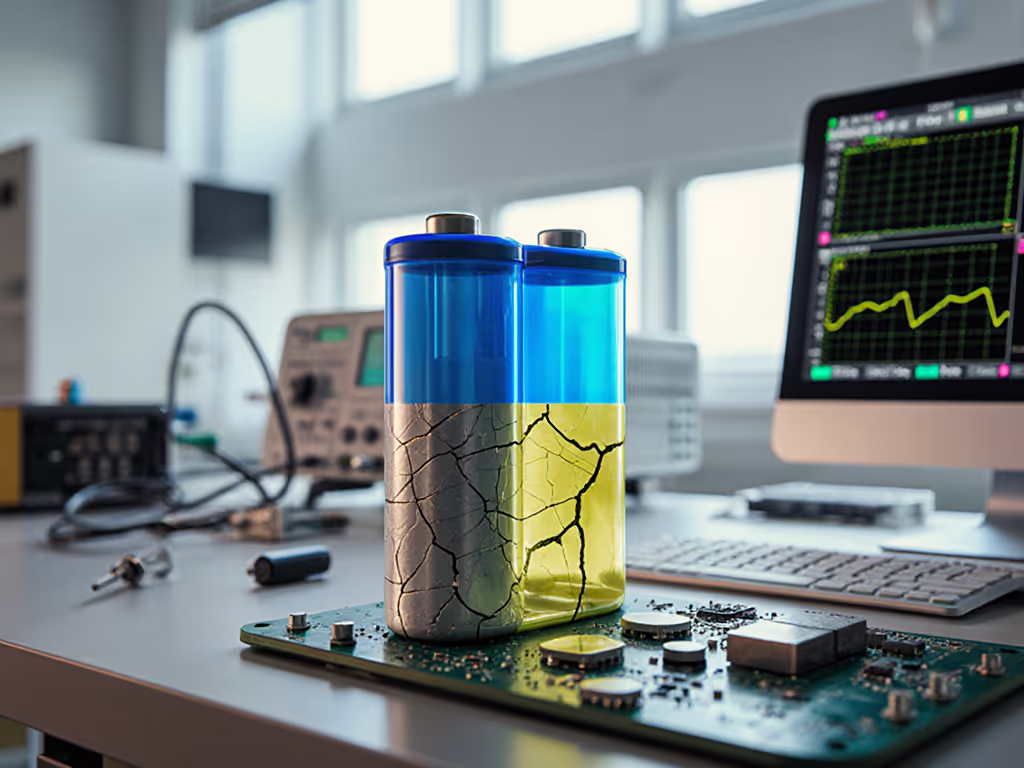
Heat also stresses lithium-ion and LFP chemistry. Each 10°C above optimal operating temperature can halve cycle life [2]. Understand the mechanisms in our battery degradation guide to plan safer thermal margins. Run a power bank at 50°C internally during pass-through, and you're burning through its lifespan faster than the label promises.
Years ago, I tested a well-regarded 10,000 mAh bank in subzero conditions during a winter traverse. The lab data said 10,000 mAh at 3.7V nominal = 37 Wh delivered. In February, cold-soaked at -10°C, with a GPS and a phone both drawing current, the bank delivered 23 Wh before shutdown (a 38% loss) [3]. Later, bench testing at home confirmed that cold reduces lithium-ion output voltage and effective capacity. For quantified cold-weather losses across chemistries, see our temperature performance analysis. But the bigger surprise: when I plugged the bank into AC power via a wall charger to feed both devices simultaneously, pass-through mode tried to engage, the BMS sensed the battery was cold, and the system entered a near-stalled state (shunting nearly all input to the phone and GPS, leaving almost nothing for recharge).
The lesson stuck: if it fails cold, it fails when you need it. Pass-through thermal design must account for worst-case: full load, ambient cold (or heat), and internal dissipation all at once.
| Factor | Impact | Mitigation |
|---|---|---|
| Poor heat sinking | Rapid thermal throttling; slow pass-through recharge | Choose banks with active cooling or large metal chassis |
| Continuous pass-through use | Accelerated cycle wear; degraded capacity in 18-24 months | Use pass-through for trips, not daily desk charging |
| Undersized BMS | Inability to meter power fairly; devices compete for current | Test with your specific device combo before departure |
| Cold ambient + pass-through | Voltage sag and BMS shutdown; simultaneous charging stalls | Insulate the bank; test cold-soaked behavior with your load |
| High-current fast-charging profiles (PD 45W+, PPS) | Sustained high dissipation; thermal limit hit sooner | Verify USB protocol compatibility under multi-device load |
To avoid thermal collapse in the field, build scenario tables before you pack:
Scenario: 8-hour conference day (urban, ambient ≈ 22°C)
Scenario: Multi-day backcountry (cold, -5°C, no AC)
Manufacturer specs for pass-through efficiency and thermal behavior are rarely published. You must validate:
The gap between lab conditions and field reality is where thermal management fails. Banks tested in ideal conditions (single device, ambient 22°C, light load) pass. Your multi-device, cold, high-current scenario exposes undersized cooling and aggressive BMS algorithms that conservative designs would never attempt.
Thermal design failures in pass-through charging are silent until you're in the field (laptop barely trickling power, phone refusing fast-charge, internal bank temperature climbing toward shutdown). The fix isn't better marketing; it's rigorous testing of your specific scenario before you trust the gear with your mission.