Product & Brand Comparisons
Best Budget Power Banks Under $15: Tested Safety & Lifespan
17th May•13 min read
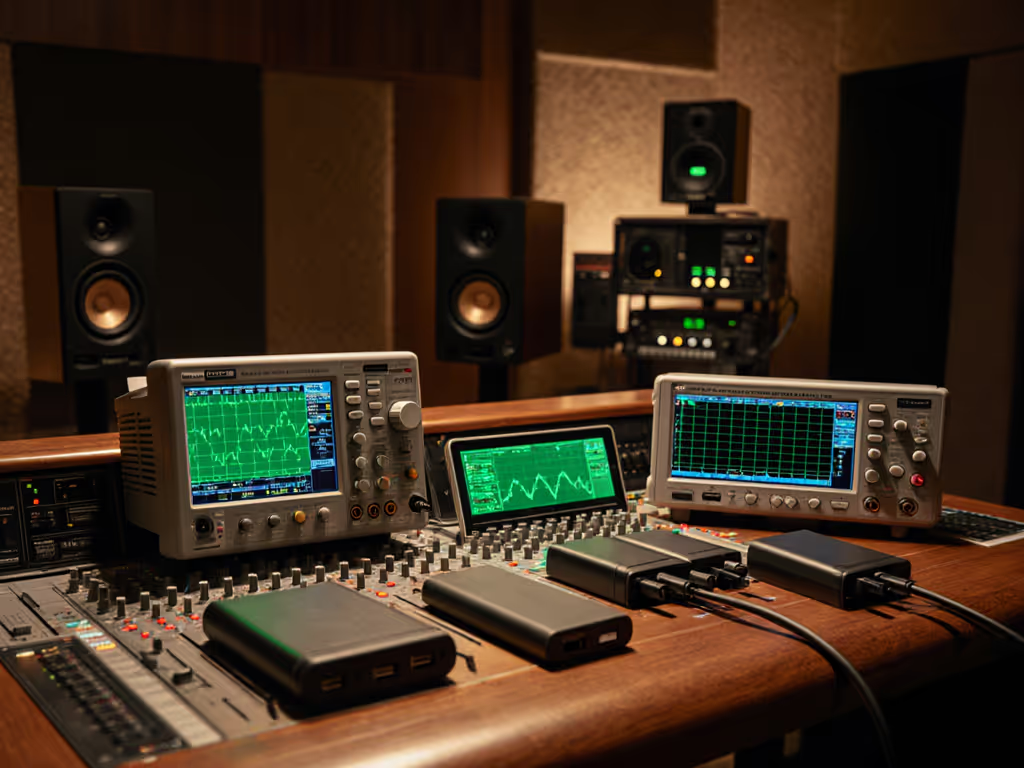
Recording studio power banks demand a different evaluation framework than travel chargers. Professional audio engineers and field recordists are not asking whether a unit can squeeze 20 hours of smartphone charging; they are asking whether the power delivery is clean enough to avoid injecting noise into microphone preamps, whether USB-PD negotiation stays locked under sustained load, and whether delivered capacity matches the Wh rating under real recording conditions. This deep dive cuts through marketing claims and focuses on what the oscilloscope actually shows. For product-level picks tuned for studio work, see our noise-free power banks for musicians tested and ranked.
When a recording studio power bank powers field equipment (USB microphones, audio interfaces, wireless transmitter packs, or laptops running DAWs), every volt of ripple or supply noise is a potential threat to signal integrity. A power bank's internal DC-to-DC converters, especially buck regulators under dynamic load, produce high-frequency ripple (typically 100 kHz to 2 MHz) that can couple into analog audio circuits through shared ground planes or USB shield inefficiencies.
Ultra-low ripple current does not happen by accident. It requires:
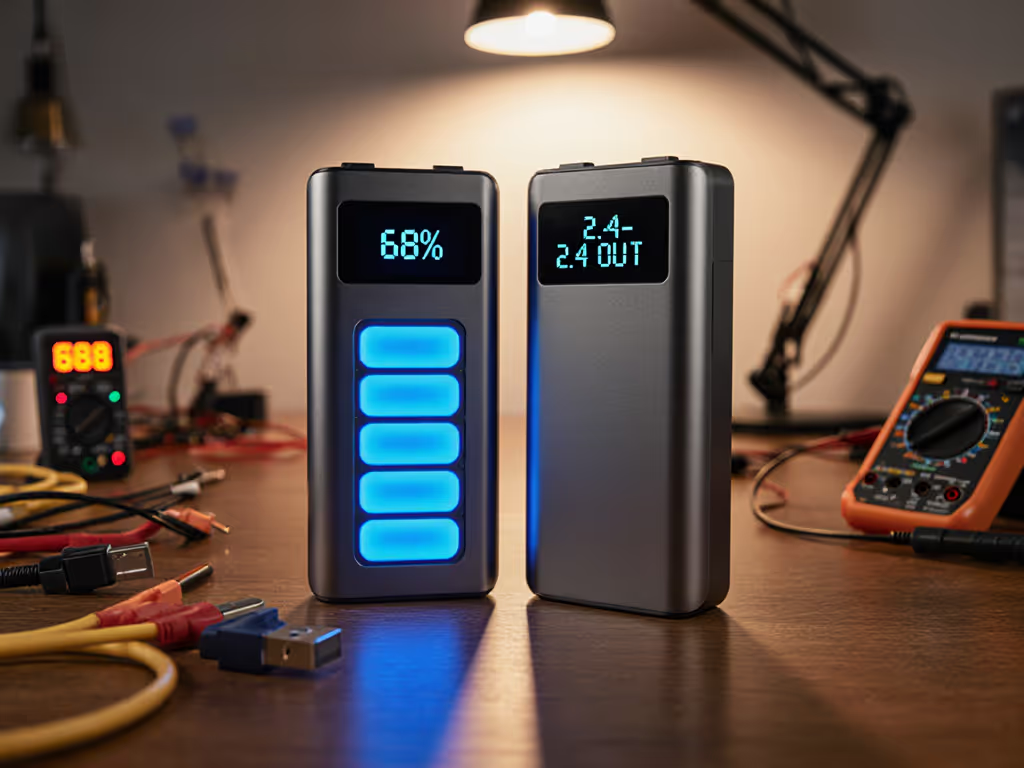
When I tested a claimed "studio-grade" 65 W unit in the lab, I captured the power delivery trace while recording through a USB audio interface. The PD contract was perfect (20V/3.25A, steady state), but the ripple envelope at the output capacitor showed 180 mV peak-to-peak at 480 kHz. That translated to audible 50 mV spikes on the microphone preamp input. The bank's datasheet claimed <50 mV ripple. The PD trace did not lie; the bank did. For an engineering breakdown of regulation and ripple control, see our BMS voltage stability comparison.
Manufacturers publish ripple under lab conditions: typically 20 mA to 100 mA load, 25 C room temperature, using a precision electronic load. Real recording setups do not replicate those conditions. A laptop drawing 30 W creates load transients 100x larger. A microphone phantom power circuit switching on creates a 500 mA step. If the bank's feedback loop cannot settle within 10-20 μs, the ripple bleeds into your audio.
Audio-grade power stability requires measured data under realistic conditions:
Without oscilloscope traces and load profiling, you are buying a lottery ticket.
Recording studios rarely operate with a single powered device. You might have a laptop (65 W demand), an audio interface (10 W), and a wireless mic receiver (5 W) all pulling from the same professional audio field power solution. Here is where power banks fall apart: if ports share a common power budget and the bank's firmware mishandles the negotiation when a second device connects, the PD contract can collapse from 20V/3.25A (65 W) to 15V/2A (30 W) or worse.
I tracked this exact scenario with a laptop that kept throttling whenever an interface was connected. Clipping a PD sniffer inline revealed the culprit: the bank firmware was re-running negotiation every time current exceeded 2.5 A, attempting to renegotiate down to 15V. The recorded audio stayed clean (the VBUS never dipped below the switching threshold), but the DAW dropped samples because the CPU underclocked mid-recording.
Verifying stable PD contracts requires:
Show me the PD trace, not just the printed specs. Also learn how power bank firmware updates can fix negotiation bugs and improve compatibility in multi-device sessions.
Many mobile studio power solutions advertise intelligent power sharing, yet under simultaneous connections they often throttle or reset ports, which can interrupt recordings. Test this by starting a 60 W laptop load, then connecting an interface and a receiver while logging per-port voltage and current; any dip on the primary PD rail, even for a few milliseconds, is a red flag. For models proven to keep rails stable across three or more devices, see our multi-device power bank comparison with distribution tests.