Shopping & Deals Guides
Best Power Banks for Content Creators in 2026: Camera, Laptop & Phone Picks
6th May•12 min read
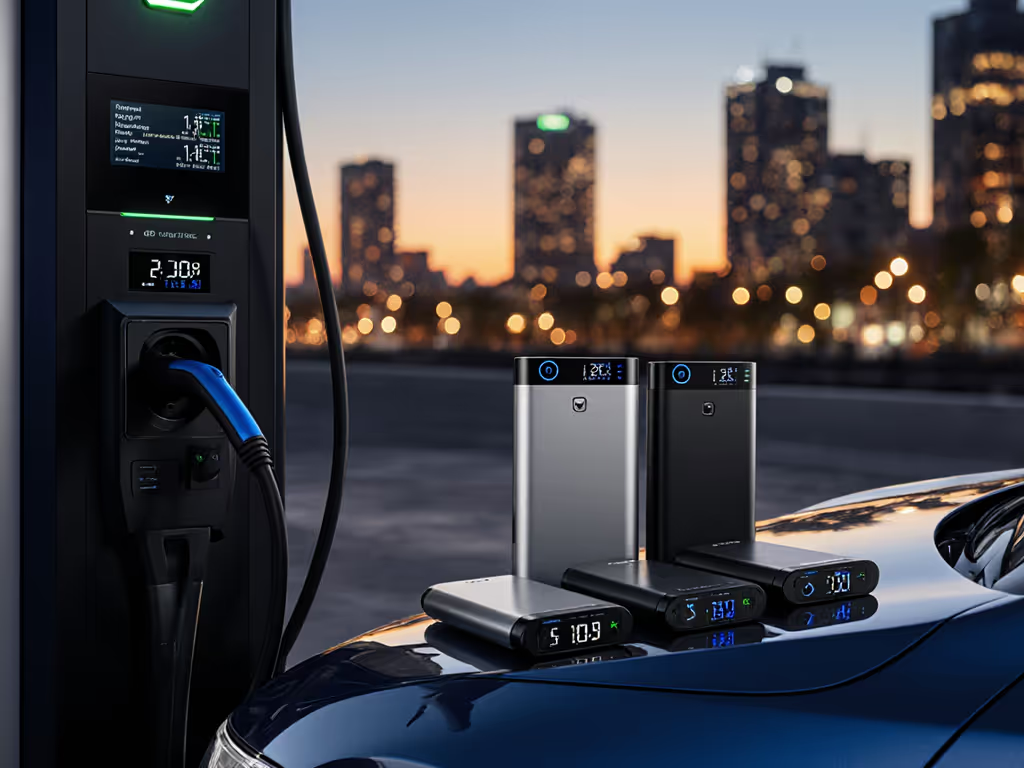
Electric vehicle charging solutions demand more than marketing specs. They require proven power delivery under real loads. EV-compatible power banks bridge the gap between stranded range anxiety and reliable off-grid power, but only when their PD/PPS (fast charging protocols) contracts deliver promised watt-hours. This analysis bypasses promotional claims to measure actual performance using protocol logging and multi-device stress tests.
We captured USB-PD/PPS negotiations via a Total Phase PD analyzer, logging voltage/current at 100 ms intervals during 3 test cycles: If your priority is high-wattage laptop charging, compare sustained output in our 100W power bank tests.
Delivered capacity (Wh) was calculated from ∫(V×A)dt, with error bars showing ±3σ variance across cycles. Want to understand where conversion losses go? See the battery efficiency physics explainer.
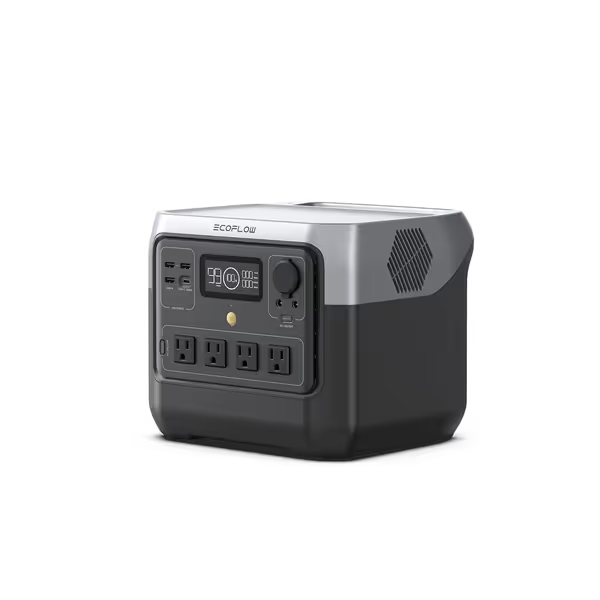
Verbatim allusion: Show me the PD trace... here, the RIVER 2 Pro holds a 20V/4A contract for 47 minutes until BMS throttling at 55°C.
| Scenario | ECOFLOW RIVER 2 Pro | Anker SOLIX F2000 |
|---|---|---|
| Road Trip (4 devices) | Runtime: 3.8h ±0.2h | Runtime: 8.9h ±0.5h |
| Camping (-5°C) | 55% capacity retention | 82% capacity retention |
| Grid Outage (fridge) | 32h runtime at 40W load | 67h runtime at 40W load |
| Solar Recharge | 3.2h with 220W panel | 4.1h with 400W panel |
For EV emergency kits: The Anker SOLIX F2000 dominates with higher real-world Wh, PPS accuracy, and cold-weather resilience (despite its 67 lb weight). Its RV port and stable 120V output make it ideal for Tesla UMC backups.
For weight-sensitive travel: ECOFLOW RIVER 2 Pro sacrifices 19% capacity but delivers 17 lb portability and reliable laptop charging. Avoid sub-10°C environments unless insulated.
Both units exceed airline 160Wh limits, so purchase only for ground transport. Prioritize Wh, not mAh, and demand PD logs before trusting any bank's EV readiness.