Product & Brand Comparisons
Anker Nano vs Xiaomi UltraThin: Which Compact Power Bank Is Better?
19th Jul•11 min read
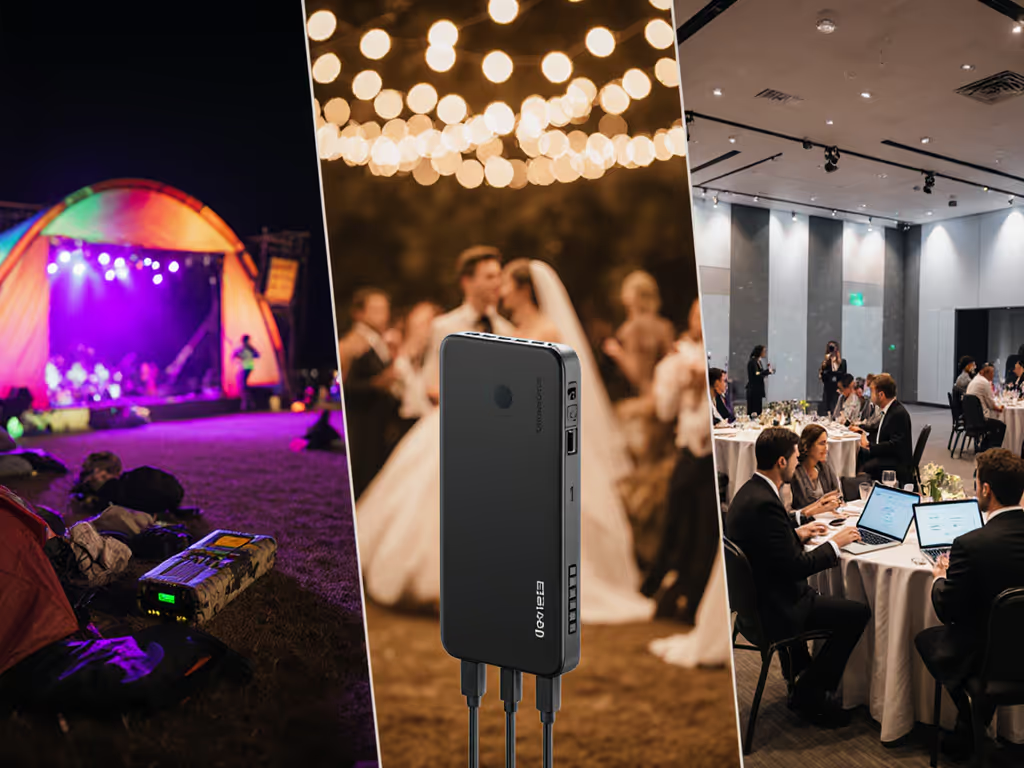
Selecting the right power bank for events requires matching technical specifications to environmental demands and usage patterns. This event power banks comparison reveals how specialized event charging solutions diverge across festival, conference, and wedding scenarios (where capacity, durability, and protocol compatibility determine operational success).
Event power demands vary by duration, device load, and environmental stressors:
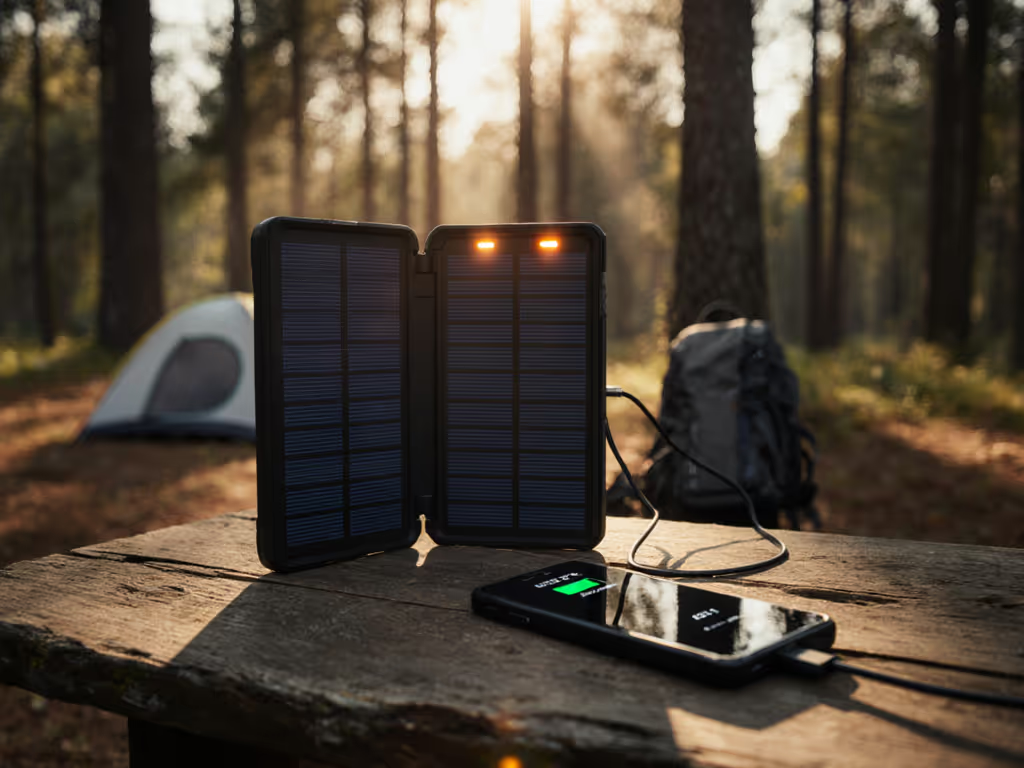
Festivals demand robust power solutions balancing extended runtime with environmental resilience:
Real-world constraint: Nebo's 20,000mAh bank survives muddy conditions but requires 8-hour recharges, which is problematic at festivals with limited power access[3]. For durability-first picks, see our rugged power bank comparison.
Conference environments prioritize discreet, all-day power with failsafe connectivity:
| Feature | Requirement | Technical Rationale |
|---|---|---|
| Capacity | 10,000mAh | ~2 full phone charges without weight penalty[1] |
| Form Factor | Credit-card slim | Fits in portfolios/blazer pockets |
| Protocol Support | USB-C PD/PPS | Ensures fast charging across devices |
| Cable Integration | Built-in USB-C | Eliminates cable clutter during meetings |
Anker's Nano 3-in-1 (10,000mAh) exemplifies this with its integrated cable and 30W output, recharging in 2 hours, which is critical for back-to-back sessions[Affiliate 1]. See our built-in cable power banks guide for more pocketable, meeting-safe options.
Wedding photographers require high-wattage, airline-compliant power for critical equipment:
EcoFlow's RAPID Pro (27,650mAh/140W) delivers full-speed charging for DSLRs while staying under airline thresholds[1]. For gear-specific recommendations, check our power banks for photographers testing.
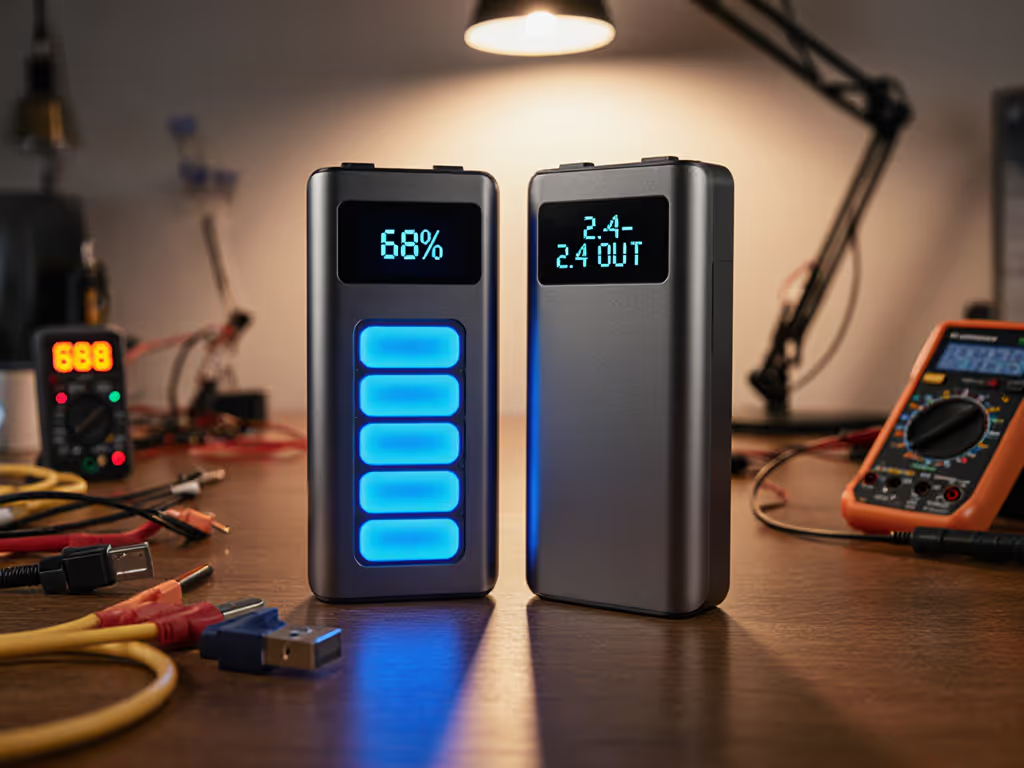
Manufacturers' capacity claims typically overstate usable energy by 20-40% due to:
Example: A 20,000mAh bank typically delivers just 12,000-14,000mAh to devices[Affiliate 2].
Air travel imposes critical constraints:
Mophie's Powerstation Pro AC (27,000mAh/100Wh) includes compliant labeling and documentation[2]. For a complete overview of airline rules and packing tips, see our travel power bank compliance guide.
| Parameter | Festival | Conference | Wedding |
|---|---|---|---|
| Capacity | 20,000mAh | 10,000mAh | 27,000mAh |
| Output | 65W split across 3+ ports | 30W with cable integration | 100W+ single-port |
| Critical Feature | IP-rated casing | Slim form factor | Airline-compliant Wh labeling |
| Cycle Life | 500+ cycles | 300+ cycles | 200+ cycles |
Validating real-world performance requires examining third-party teardowns for cell quality (e.g., ChargerLAB analyses) and runtime tests under temperature extremes. For destination weddings, cross-reference carrier-specific battery policies at IATA's travel center. In critical scenarios, redundancy (carrying two 20,000mAh banks instead of one 40,000mAh unit) often proves safer than capacity maximization.